Chapter 3 of 12 · 2 min read
Prototype Zero: Paste, Analyze, Explain
Why the first useful interface made its reasoning visible instead of returning a mysterious number.
Inside ~Cortisol Checker~ · v1.0 · Moses Sam Paul
The first code arrived as a local command-line MVP on 13 June 2026. A paste-and-analyze Netlify interface followed the same day. The interaction was deliberately narrow: provide text, press Analyze, and inspect the result.
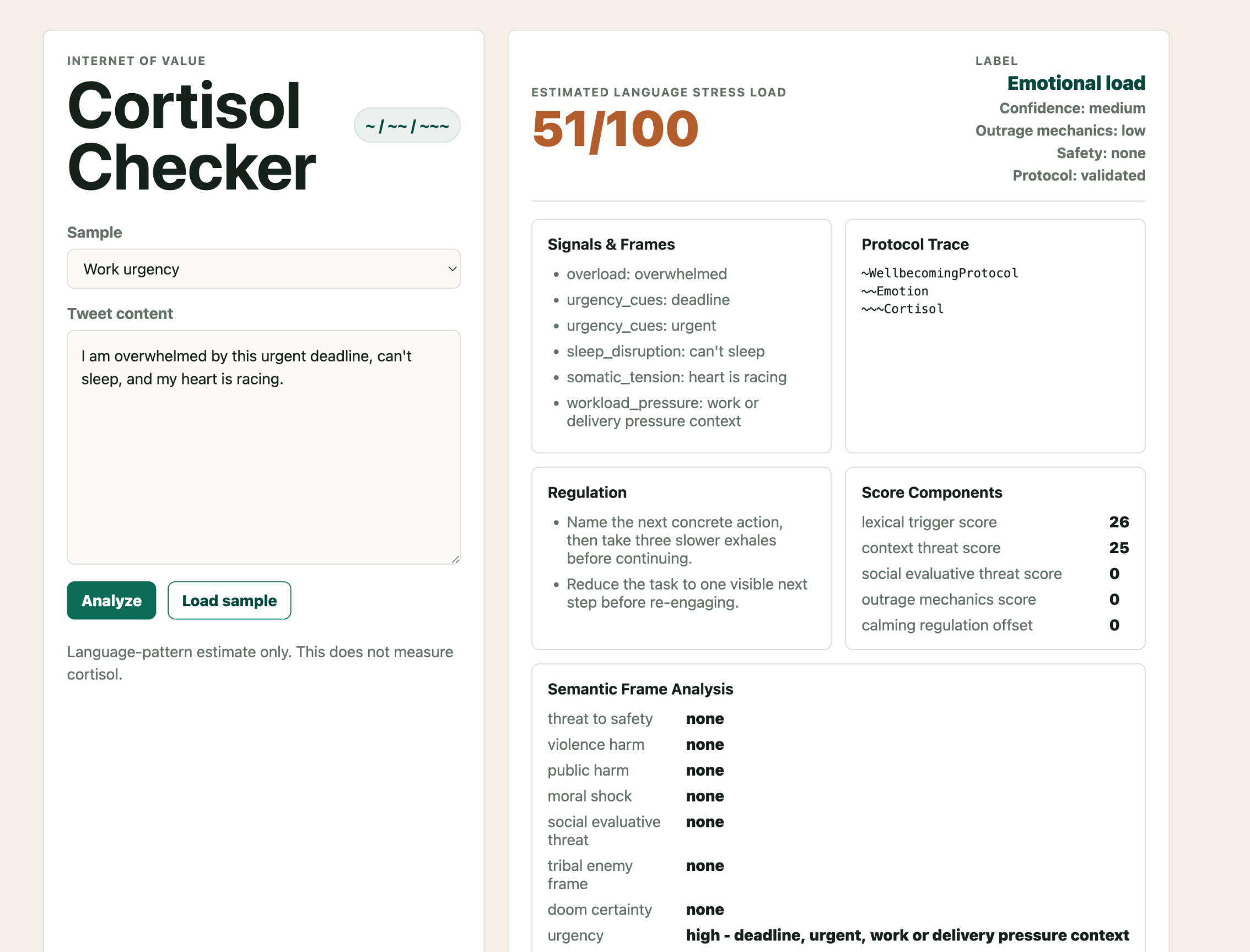
The number was never enough. A useful prototype needed to show what it had matched, how those matches were grouped, which semantic frames appeared, how confident the mechanism was in the amount of evidence, and where the result sat in the protocol trace. It also exposed raw JSON. That choice turned the screen from a verdict into an inspectable instrument.
The prototype returned:
- a
0–100language stress-load score and label; - confidence with a textual reason;
- a distinct outrage assessment;
- five score components;
- semantic frames and their evidence;
- detected lexical signals and contextual frames;
- the
~WellbecomingProtocol → ~~Emotion → ~~~Cortisoltrace; - regulation suggestions and a generated reply;
- a non-medical disclaimer.
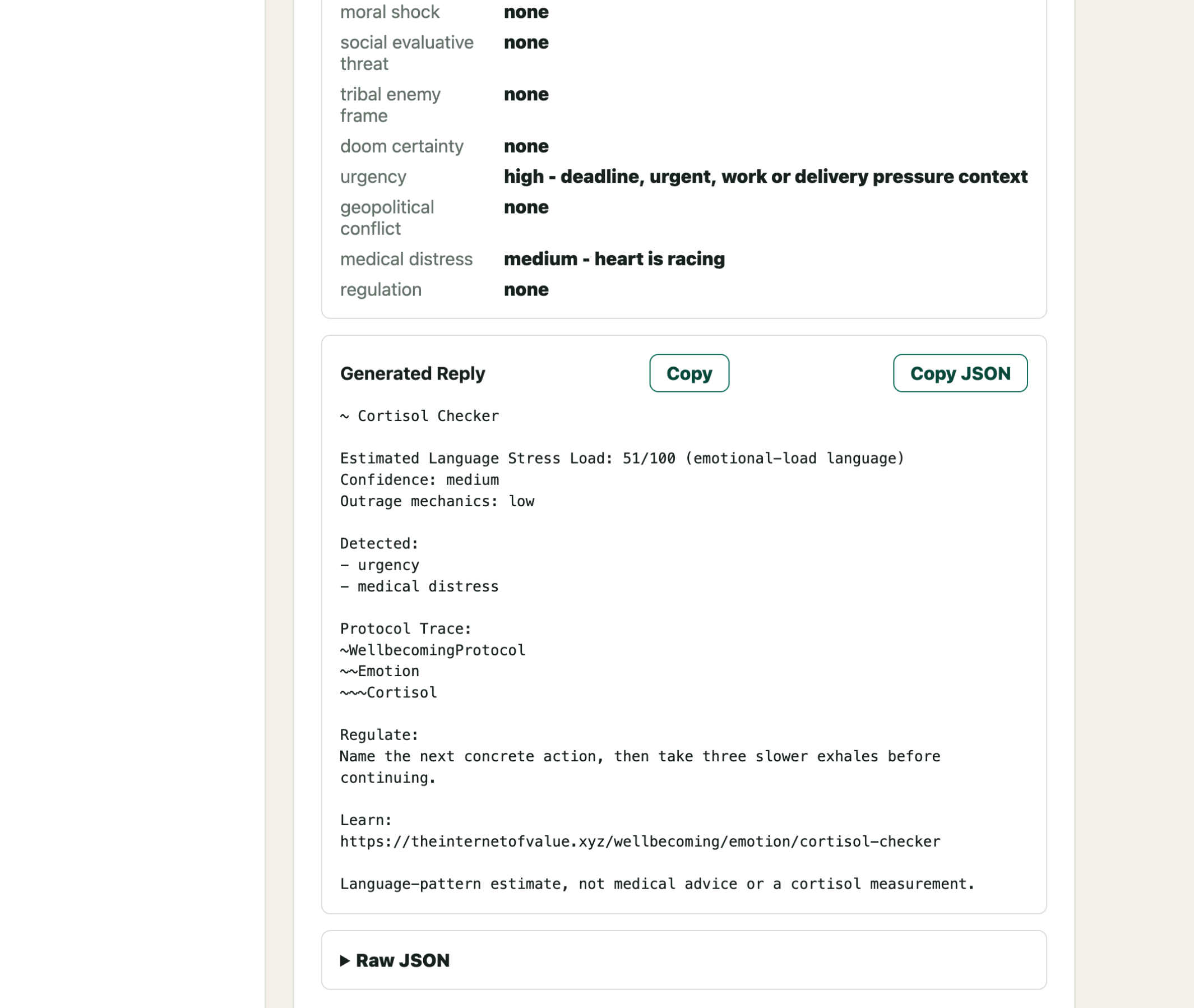
That transparency exposed weaknesses quickly. Public-harm language initially needed stronger calibration. Serious geopolitical critique needed to register emotional load without being mislabeled as rage-bait. Sensitive language needed a restrained response route. The prototype therefore led directly to semantic frames, calibration cases, safety detection, response schemas, registry validation, and pinned public samples.
The interface also taught a product lesson that remains true: the score becomes less trustworthy when explanation is hidden. The current beta still returns the rich anonymous analysis. Identity is not required to see it, and identity does not change it.